The Room Changes Your Red Light Dose More Than You Would Guess
Quick Answer: Reflective surroundings add usable light — light walls, a mirror behind you, or a small room can raise effective dose meaningfully, while a dark room absorbs it. Manufacturer irradiance figures are measured in controlled conditions, so the same panel at the same distance genuinely delivers different doses in different rooms.
You bought the panel, measured the distance, and set a timer.
Then you moved it from the white bathroom to the dark bedroom, and the dose you calculated stopped being the dose you are getting.
How much does the room actually matter?
Less than distance, more than session length — which puts it in an awkward middle nobody accounts for.
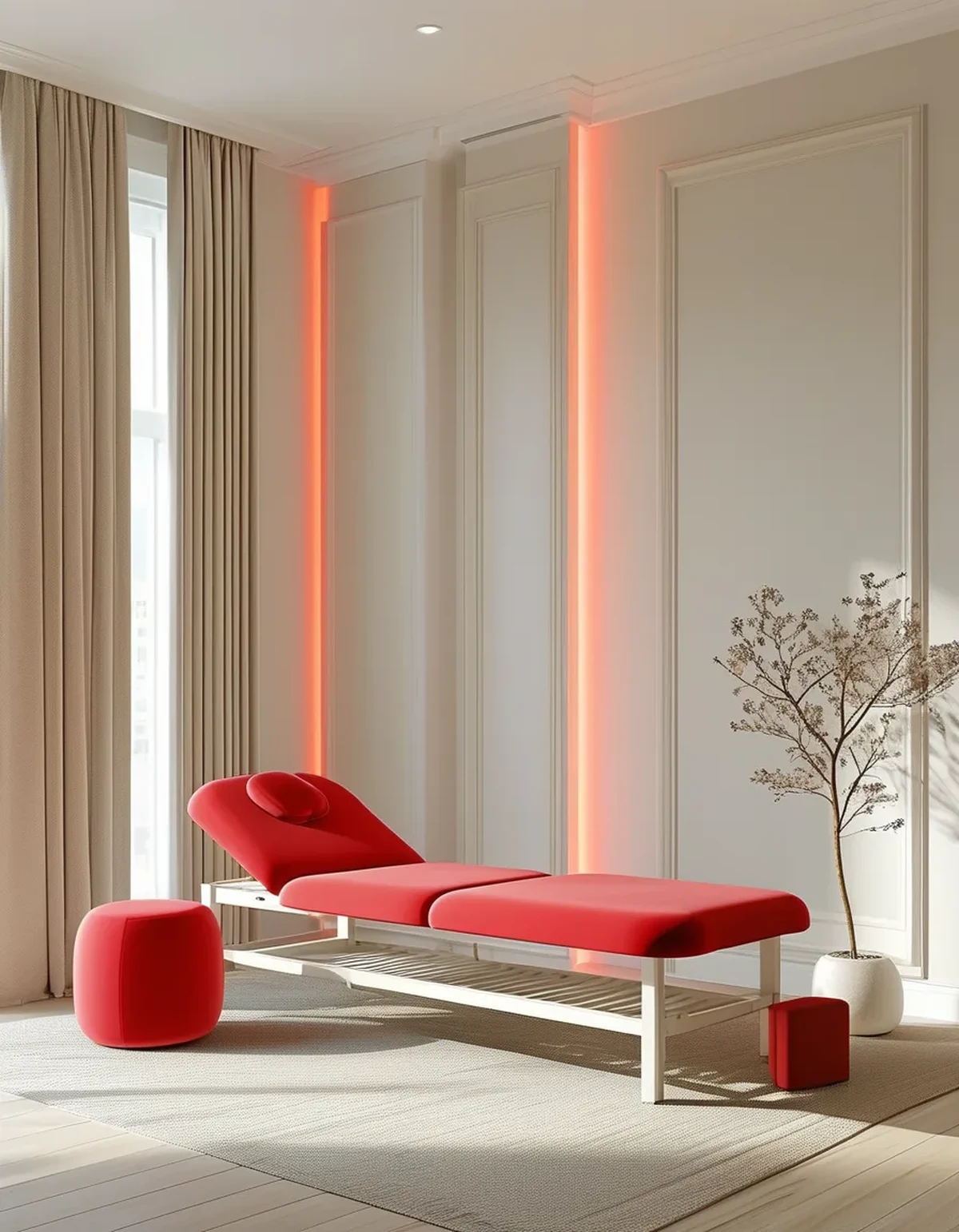
Light-colored walls reflect a meaningful share of red and near-infrared light. White paint reflects a high proportion of visible red, and a small room with white walls returns some of the light that missed you on the first pass. Dark walls absorb most of it.
Room size decides how much comes back. In a small bathroom the walls are close enough for reflected light to return with useful intensity. In a large open room, the reflected component is negligible because intensity falls off with distance on the return trip too.
Mirrors are the strongest single surface. A mirror behind you returns light to your back at close to full intensity. Whether that is helpful depends on whether you wanted your back treated, but the effect is real.
Near-infrared behaves differently from visible red. Reflectance varies by wavelength and by surface, so a room that reflects the visible red glow well may return less of the near-infrared you cannot see. Judging by how bright the room looks is unreliable.
The effect is a bonus, not a substitute. Reflected light supplements the direct beam; it does not replace correct distance. Distance remains by far the largest variable, because intensity falls with roughly the square of it.
What else in the room changes your dose?
Several things people never consider as part of the setup.
What you are wearing, obviously and completely. Fabric blocks most therapeutic wavelengths. Treated skin has to be bare skin — a thin t-shirt is not a partial dose, it is close to no dose.
What is on your skin. Sunscreen, thick moisturizer, and makeup all scatter and absorb light before it reaches the tissue. Clean, dry skin is a genuinely different dose than moisturized skin.
Ambient room lighting is irrelevant. Household bulbs contribute nothing at the intensities involved. You can run a session with the lights on and lose nothing, whatever the marketing implies about darkness.
Room temperature affects the panel, not you. LEDs lose efficiency as they heat up, so a panel in a hot, poorly ventilated room may output slightly less than its rating by the end of a session. Panels with active cooling are less affected.
Your position drifts more than you think. Standing freehand at 6 inches, most people move several inches over ten minutes, and at that range a few inches is a large proportional change in dose. A marked spot on the floor is a more valuable accessory than most of what gets sold alongside panels.
Myth vs Fact: Red Light Setup
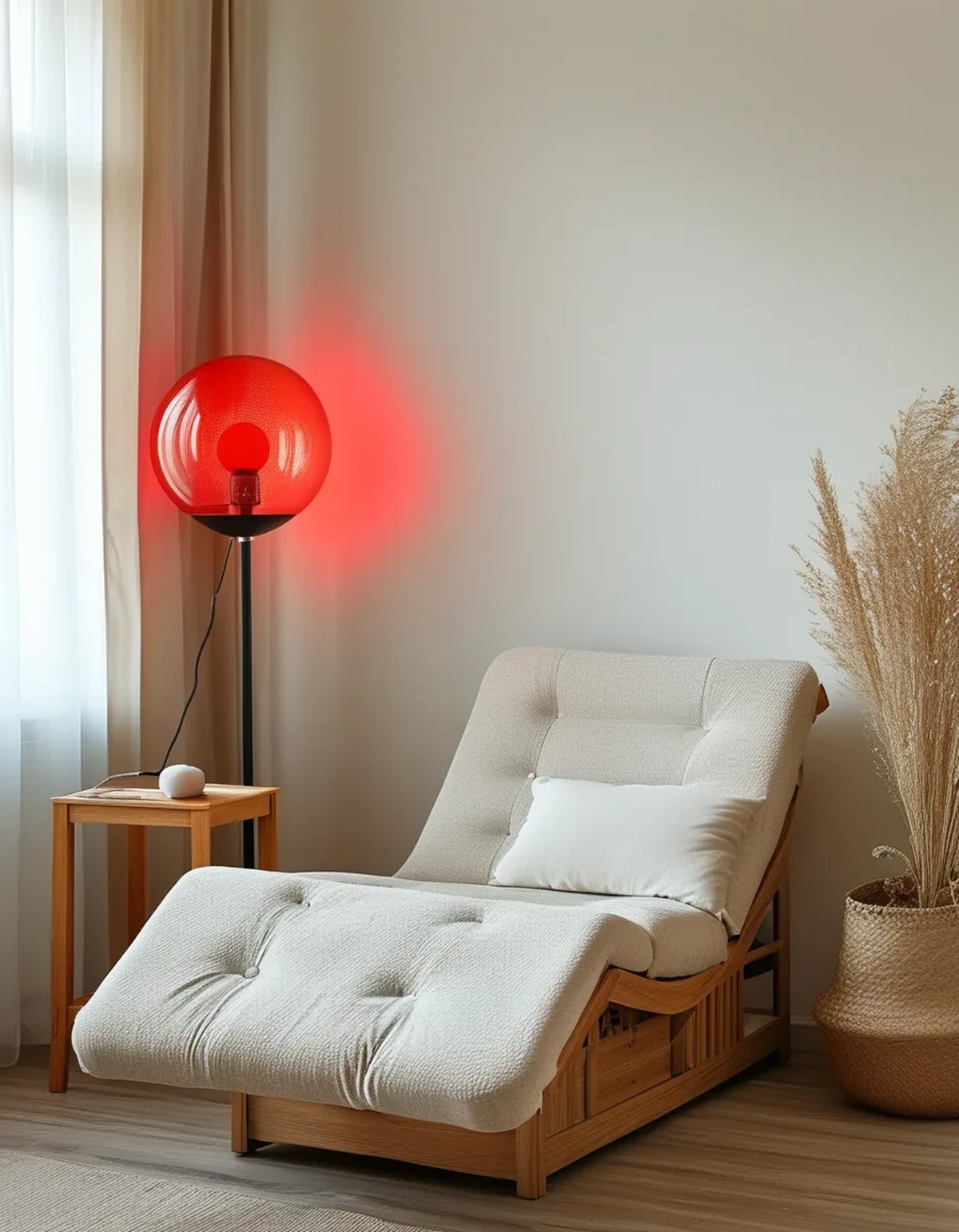
Myth: A dark room makes the treatment more effective. Fact: The opposite, marginally. Ambient light does not interfere, and a dark room absorbs the reflected component rather than returning it. Room darkness is a comfort preference with no therapeutic basis.
Myth: Manufacturer irradiance numbers let you calculate your dose exactly. Fact: They are measured with a specific meter at a specific distance under controlled conditions, and measurement standards vary between brands. Treat them as a comparison guide within a brand rather than as a precise figure for your bathroom.
Myth: Sitting closer always means a better dose. Fact: Closer means more intensity over a smaller area, which is a trade rather than an upgrade. Very close positioning treats a fraction of the area you assume it does, which is the most common setup error people make.
Myth: More sessions per day speeds up results. Fact: Evidence suggests a biphasic dose response — beyond an optimal dose, additional exposure does not add benefit and may reduce it. Consistency across weeks outperforms intensity within a day.
Myth: The warmth you feel is the treatment working. Fact: The warmth is mostly the LEDs’ own waste heat and any near-infrared absorbed superficially. It is not a measure of anything therapeutic, and a panel that feels cooler is not necessarily delivering less.
How do you set up a room properly?
Fix the variables you can control and stop worrying about the rest.
Mark your distance on the floor with tape. The single most valuable thing you can do. Consistency of distance matters more than the exact number, and freehand positioning drifts substantially.
Use a smaller, lighter-walled room if you have the choice. A white bathroom outperforms a dark bedroom for the same panel and distance. It is a free improvement.
Treat bare, clean skin. Remove skincare from the area 10 minutes before if you can. This is a bigger factor than the room by a wide margin.
Rotate to cover the area you intend to treat. Panels illuminate a smaller effective area than their physical size suggests, especially close up. Two positions of five minutes often beats one position of ten.
Keep a simple log for six weeks. Distance, minutes, area, and any change you notice. Red light effects are slow and modest, and without a log you cannot distinguish a real change from a good week. Follow the manufacturer’s eye protection guidance, and if you have a photosensitive condition or take photosensitizing medication, check with a clinician first. This is general information, not medical advice.
FAQ: Red Light Room Setup, Answered
Do I need a dark room for red light therapy?
No. Ambient household light does not meaningfully interfere at these intensities, and a dark room actually absorbs reflected light that a lighter room would return to you. Darkness is a comfort choice, not a requirement.
Does a mirror behind me help?
It returns light to whatever it faces, so a mirror behind you delivers a supplementary dose to your back. Useful if that is a target area, irrelevant if it is not. It does not increase the dose to the side facing the panel.
Why do results differ between my bathroom and bedroom?
Wall color and room size change the reflected component, and it is likely your distance differs between the two setups even if you think it does not. Tape a mark on the floor in both rooms and the difference usually shrinks considerably.
TL;DR:
- Light-colored walls in a small room return usable reflected light; dark rooms absorb it — a real but secondary effect.
- Distance remains the dominant variable, so mark it on the floor rather than eyeballing it each session.
- Bare, clean skin matters far more than the room: fabric and skincare block most of the dose.
- Manufacturer irradiance figures come from controlled conditions and are comparison tools, not measurements of your setup.
The panel’s specification describes a laboratory. Your bathroom is a different optical environment, and a strip of floor tape closes most of the gap.
Keep Reading
This article is for general informational purposes only and is not medical advice. Always consult a qualified health professional for guidance specific to you.