Why Red Light Therapy Results Take Longer to Show Than Most People Expect
Quick Answer: Red light therapy works by stimulating cellular processes like collagen production and mitochondrial energy output, both of which are gradual biological processes that unfold over multiple weeks of consistent exposure, not a single or few-session event — most research supporting visible skin or recovery benefits involves consistent use over 8-12 weeks or longer, which is considerably longer than the quick-fix impression much red light therapy marketing creates.
Red light therapy’s biological mechanism is inherently gradual, which means the marketing-driven expectation of fast, dramatic results is usually the actual source of disappointment, not the therapy itself failing to work.
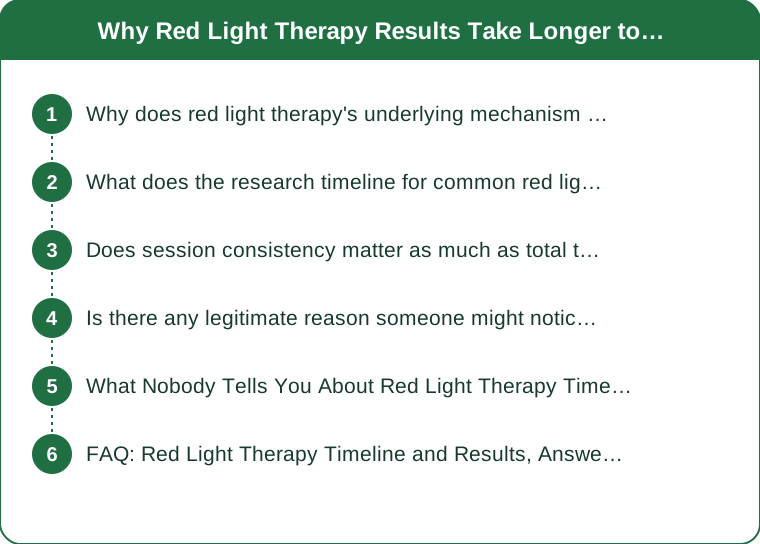
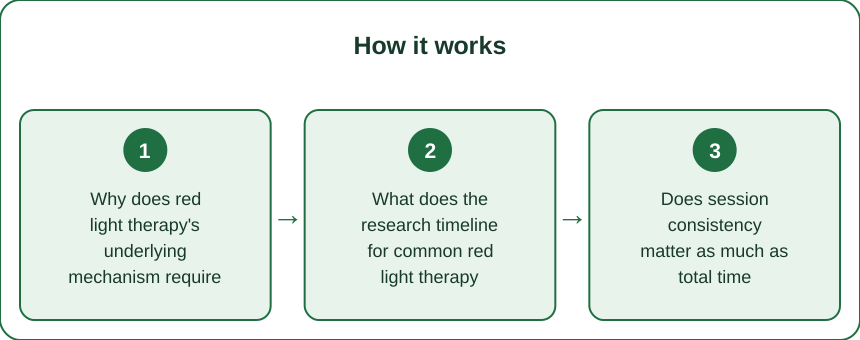
Why does red light therapy’s underlying mechanism require weeks rather than producing faster results?
Red light therapy is understood to work primarily by stimulating mitochondrial activity within cells, which supports processes like collagen synthesis and cellular repair — and these are inherently gradual biological processes that take real time to accumulate into visible change, similar to how collagen-boosting skincare ingredients generally require weeks of consistent use before producing visible results. There’s no mechanism by which this cellular-level stimulation would produce dramatic same-week visible transformation.
What does the research timeline for common red light therapy benefits actually show, in more specific terms?
Much of the supporting research for benefits like improved skin texture, fine line reduction, or wound healing support involves study protocols of consistent use spanning roughly 8 to 12 weeks or longer, with multiple sessions per week. Studies examining shorter timelines generally show more modest or less consistent results, reinforcing that the gradual, cumulative pattern isn’t just cautious marketing language — it reflects how the actual studied protocols were structured.
Does session consistency matter as much as total time elapsed for seeing eventual results?
Yes, significantly — skipping sessions or using inconsistently likely slows or reduces the cumulative cellular effect the therapy depends on, meaning two people starting on the same day but with different consistency levels can have quite different outcomes at the same number of weeks elapsed. Following a consistent, regular session schedule, closely matching what supporting research protocols used, gives the therapy the best realistic chance of producing the results studies have shown.

Is there any legitimate reason someone might notice a difference sooner than the typical multi-week timeline?
Some users report subtle, short-term effects like slightly improved skin appearance or a temporary reduction in mild inflammation relatively soon, though these early impressions are generally modest compared to the more substantial cumulative changes (like measurable collagen increase) that take the full multi-week timeline to develop. Setting an expectation of gradual, cumulative improvement, rather than watching for an early dramatic change, better matches what the underlying biology actually supports.
What Nobody Tells You About Red Light Therapy Timelines
Progress photos taken under identical, consistent lighting conditions at the start and then every few weeks are far more reliable for actually noticing red light therapy’s gradual results than daily in-mirror assessment, since day-to-day mirror checking is prone to missing slow, cumulative change entirely — many people who feel red light therapy “isn’t working” based on daily assessment are surprised by a clear, real difference when comparing consistent photos taken weeks apart.
FAQ: Red Light Therapy Timeline and Results, Answered
How many sessions per week are typically recommended to actually match the timeline research supports?
Many studied protocols use 3 to 5 sessions weekly, though specific device and treatment guidelines vary, so following the specific device’s recommended frequency is worthwhile.
Does stopping red light therapy after achieving results mean those results are maintained indefinitely?
Some studies suggest ongoing maintenance sessions help sustain results over time, similar to many skincare interventions, rather than results being permanent after a single treatment course.
Is it reasonable to combine red light therapy with other skincare or recovery approaches during this multi-week window?
Yes, generally — combining red light therapy with other evidence-supported approaches (like a consistent skincare routine or standard recovery practices) is common and doesn’t typically interfere with red light therapy’s own gradual mechanism.
TL;DR:
- Red light therapy works through gradual cellular processes like collagen synthesis, not immediate effects
- Supporting research generally involves consistent use over 8-12 weeks or longer to show real results
- Session consistency matters significantly for reaching the cumulative effect research protocols demonstrate
- Photo comparisons over weeks reveal gradual progress far more reliably than daily mirror assessment
Red light therapy’s slow visible timeline reflects genuine, gradual biology, not a failure of the therapy — matching expectations to that real timeline is what actually determines whether someone sticks with it long enough to see results.
Keep Reading
This article is for general informational purposes only and is not medical advice. Always consult a qualified health professional for guidance specific to you.