Why Red Light Therapy Feels Warm on Your Skin When It's Not Supposed to Heat You Up
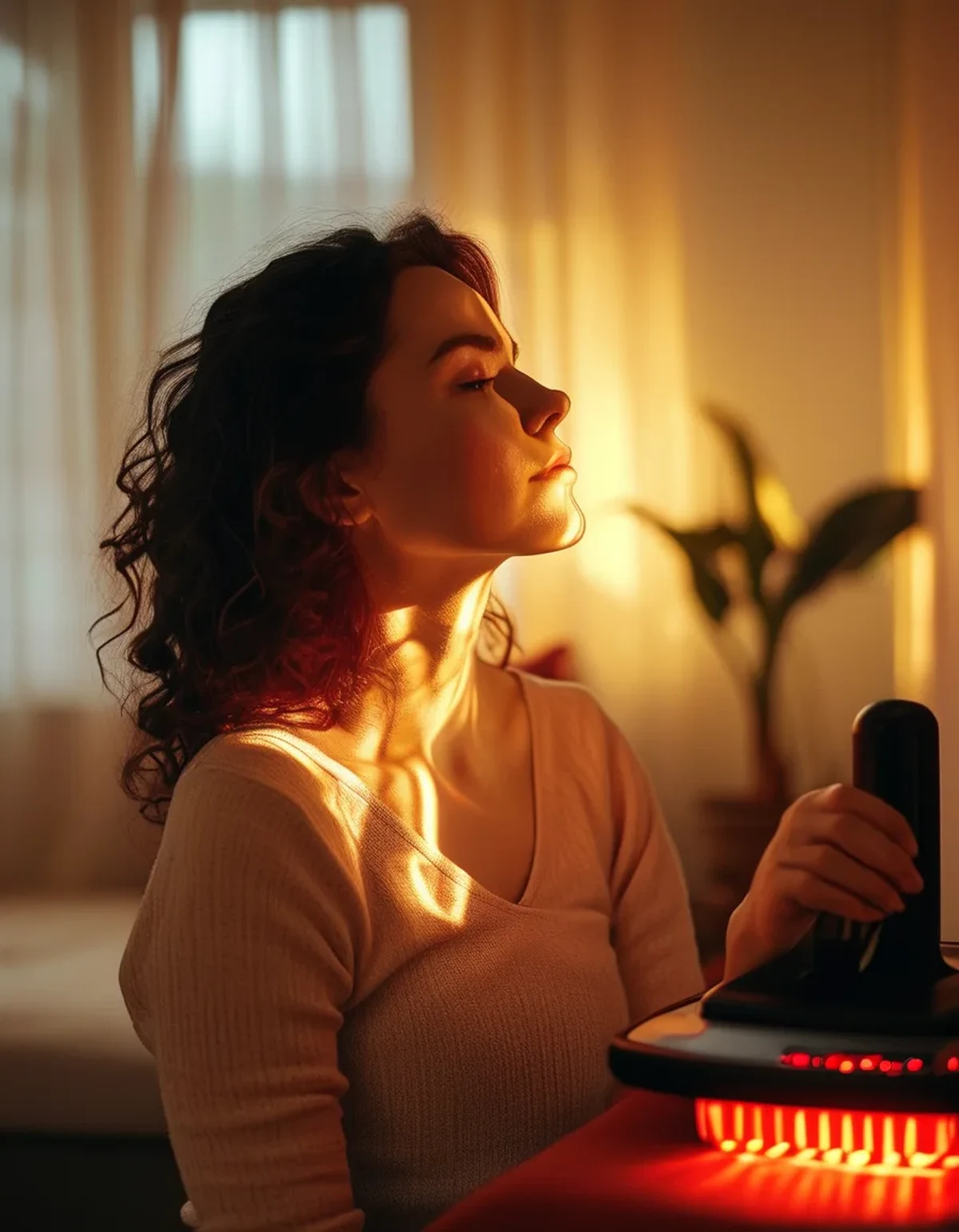
Quick Answer: The warmth felt during a red light therapy session mostly comes from the device’s LEDs and any accompanying infrared wavelengths generating heat as a byproduct, not from the specific therapeutic mechanism (photobiomodulation) the treatment relies on — meaning the warmth is a real but largely incidental sensation, not proof the treatment is ‘working harder.’
Feeling warm doesn’t mean more red light is being absorbed for therapeutic effect; it mostly means the device is running and generating heat, which is a separate process.
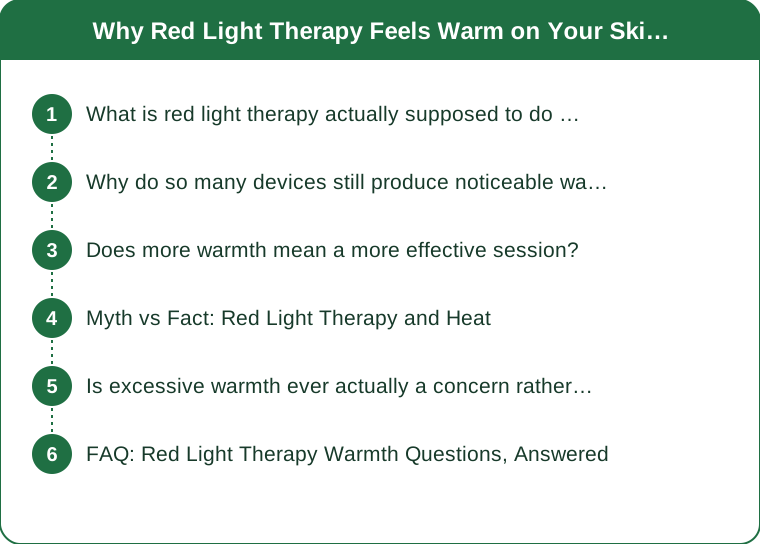
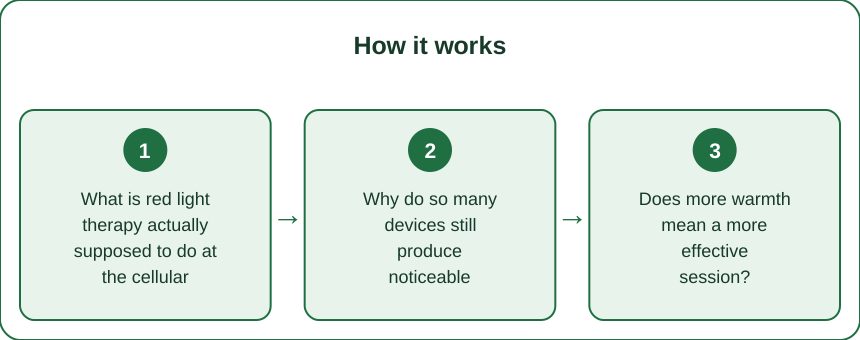
What is red light therapy actually supposed to do at the cellular level?
The core proposed mechanism, photobiomodulation, involves specific wavelengths of red and near-infrared light being absorbed by mitochondria in skin cells, potentially influencing cellular energy production — this process itself doesn’t require or rely on the skin surface heating up meaningfully to occur, which is a common point of confusion.
Why do so many devices still produce noticeable warmth, then?
Most consumer red light devices combine red and near-infrared LEDs, and the LEDs themselves generate heat as an electrical byproduct during operation, plus near-infrared wavelengths in particular penetrate and are absorbed in ways that produce some incidental warming sensation — none of which is the same thing as the targeted cellular mechanism the therapy is aiming for.
Does more warmth mean a more effective session?
Not reliably — warmth level is influenced by device design, distance from skin, session duration, and ambient room temperature, none of which map cleanly onto how much therapeutic light dose the skin is actually receiving, so using warmth as a proxy for effectiveness is an unreliable habit that can lead to unnecessary distance or duration changes.
Myth vs Fact: Red Light Therapy and Heat
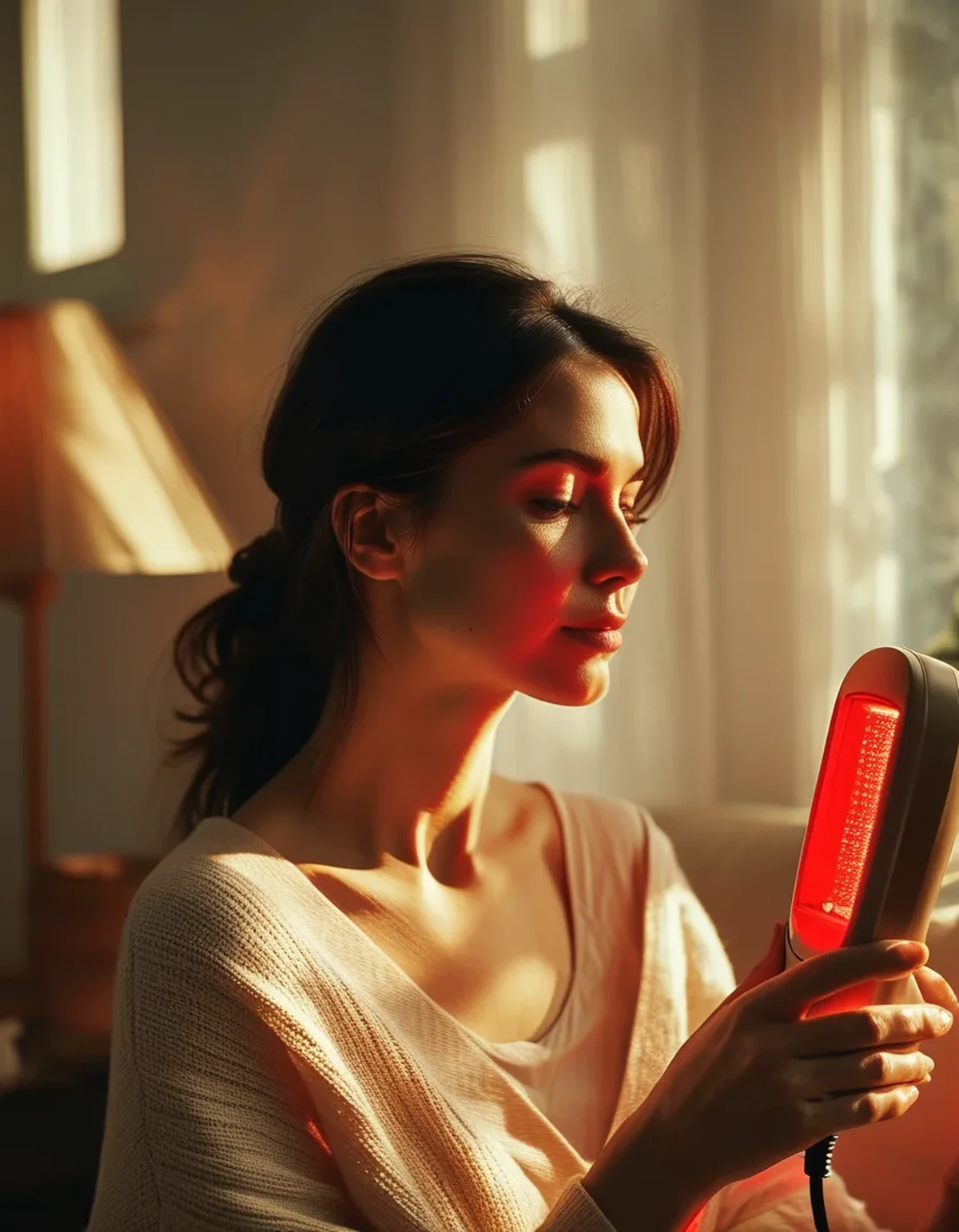
Myth: feeling more warmth means you’re getting more benefit. Fact: warmth is a heat byproduct largely separate from the light-absorption mechanism that drives the treatment’s proposed effects.
Myth: red light therapy is basically the same as infrared sauna heat therapy. Fact: they’re genuinely different mechanisms — sauna therapy is intentionally heat-based, while red light therapy’s core proposed benefit doesn’t require heat at all.
Myth: if a session doesn’t feel warm, the device isn’t working. Fact: some well-designed devices run cooler by design and can still deliver an effective light dose without significant warmth.
Is excessive warmth ever actually a concern rather than just a sensation?
Yes, in specific situations — device placement too close to skin for too long can cause genuine low-level thermal irritation or discomfort separate from any light-based effect, so following manufacturer-recommended distance and duration guidelines matters both for comfort and to avoid unnecessary heat exposure that isn’t adding therapeutic value.
FAQ: Red Light Therapy Warmth Questions, Answered
Should a red light device ever feel hot rather than mildly warm?
No — genuine heat or discomfort suggests the device is too close, used for too long, or malfunctioning, and session distance or duration should be adjusted rather than pushing through discomfort.
Does skin tone or sensitivity affect how much warmth is felt?
Yes, somewhat — more sensitive skin can perceive the same incidental warmth more noticeably, which is a sensation difference rather than a sign of a different treatment effect being received.
Is a cooler-running device inherently a worse product?
Not necessarily — warmth level says more about a device’s thermal design than its light output quality, so it shouldn’t be used alone to judge a device’s effectiveness.
TL;DR:
- Red light therapy’s core mechanism doesn’t require noticeable skin heating to function
- Warmth mostly comes from LED heat output and near-infrared wavelengths, not the therapeutic process itself
- More warmth isn’t a reliable sign of a more effective session
- Genuine heat or discomfort signals a distance or duration adjustment is needed
- Warmth level reflects device thermal design more than light-dose effectiveness
This is general information, not medical advice — persistent skin irritation from any device warrants stopping and checking with a professional.
Keep Reading
This article is for general informational purposes only and is not medical advice. Always consult a qualified health professional for guidance specific to you.