Why Red Light Therapy Eye Protection Instructions Vary So Much From One Device to Another
Quick Answer: Eye protection recommendations for red light therapy vary between devices mainly because output intensity, wavelength mix, and distance from the eyes differ significantly across products, so a low-intensity handheld device used at a distance may carry different guidance than a high-output panel used close to the face — the inconsistency in instructions usually reflects genuine differences in device intensity, not carelessness on any single brand’s part.
The advice differs because the devices genuinely differ, not because one manufacturer is being more careful than another for no reason.
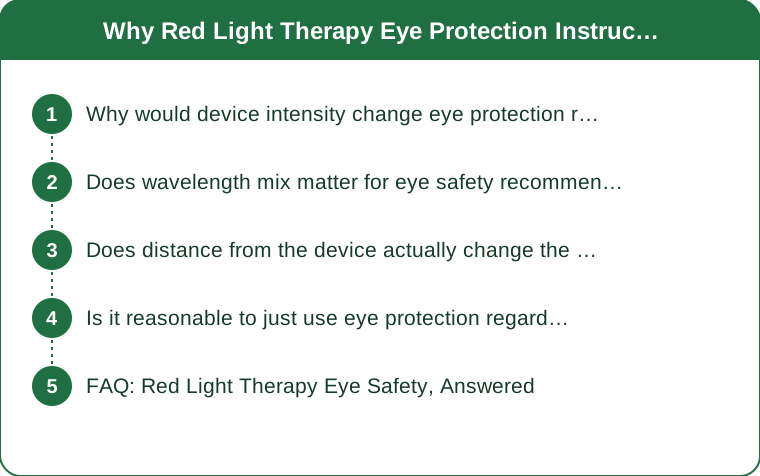
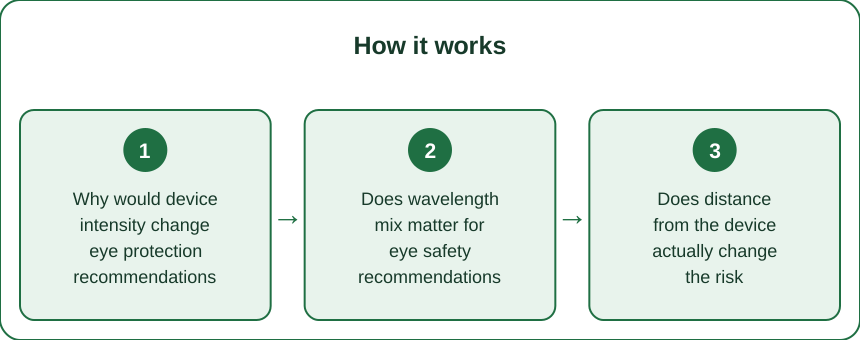
Why would device intensity change eye protection recommendations this much?
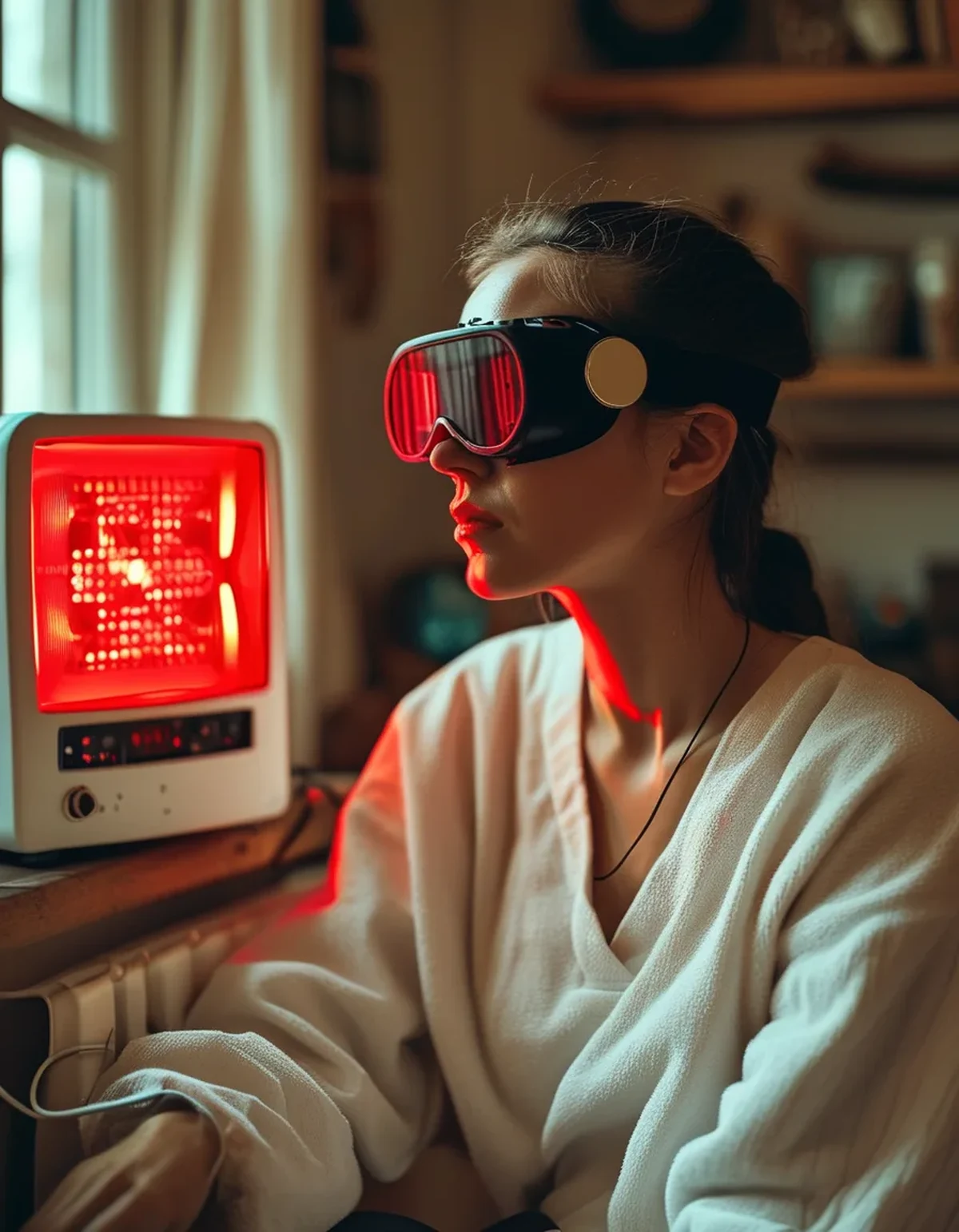
Higher-intensity devices deliver significantly more light energy to the eyes at close range, which is why high-output panels more consistently recommend protective eyewear, while lower-intensity handheld devices used further from the face carry comparatively lower exposure.
Does wavelength mix matter for eye safety recommendations too?
Yes — some devices combine red and near-infrared wavelengths, and near-infrared light is invisible, meaning the eye’s natural blink and aversion reflex to bright visible light doesn’t provide the same protective response that it would against visible light alone.
Does distance from the device actually change the risk meaningfully?
Light intensity decreases substantially with distance, so a device used at arm’s length carries meaningfully lower eye exposure than the same device held close to the face, which is part of why usage distance is often specified alongside eye protection guidance.
Is it reasonable to just use eye protection regardless of what a specific device recommends?
Using protective eyewear regardless of a specific device’s stated recommendation is a reasonable, low-cost precaution, particularly for higher-intensity panels or longer session durations, even when it isn’t strictly mandated by the manufacturer.
FAQ: Red Light Therapy Eye Safety, Answered
Can I just close my eyes instead of wearing goggles during a session?
Closed eyelids block a meaningful amount of light, though they don’t fully replace dedicated eye protection, especially for higher-intensity panels used at close range.
Does this eye protection guidance apply to blue light devices the same way?
Blue light devices carry different and often more emphasized eye safety guidance due to different wavelength effects, so their instructions shouldn’t be assumed to match red or near-infrared devices.
Is any red light therapy device completely risk-free for the eyes without any precautions?
No device should be assumed entirely risk-free for direct, prolonged eye exposure, which is why checking and following the specific product’s guidance remains the most reliable approach.
TL;DR:
- Eye protection guidance differs mainly due to real differences in device intensity and wavelength
- Near-infrared light is invisible, so the eye’s natural aversion reflex doesn’t provide protection
- Distance from the device meaningfully changes actual eye exposure levels
- Using eye protection regardless of a device’s specific stated requirement is a reasonable precaution
Keep Reading
This article is for general informational purposes only and is not medical advice. Always consult a qualified health professional for guidance specific to you.