The Consistency Mistake That Quietly Wastes Most Red Light Therapy Routines
Quick Answer: Most red light therapy research showing measurable skin or recovery benefits used sessions performed 3-5 times per week for at least 8-12 weeks — a single occasional session, or a routine that gets skipped for a week here and there, doesn’t come close to matching the consistency the supporting research is actually based on, which is the most common reason people report the device ‘doesn’t work.’
Device quality and session length get most of the attention, but consistency is the variable doing the most quiet damage to results.
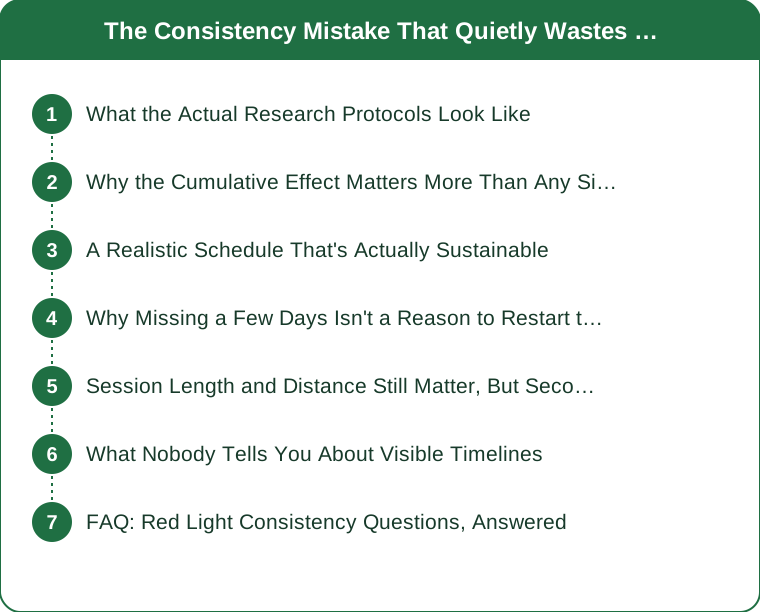
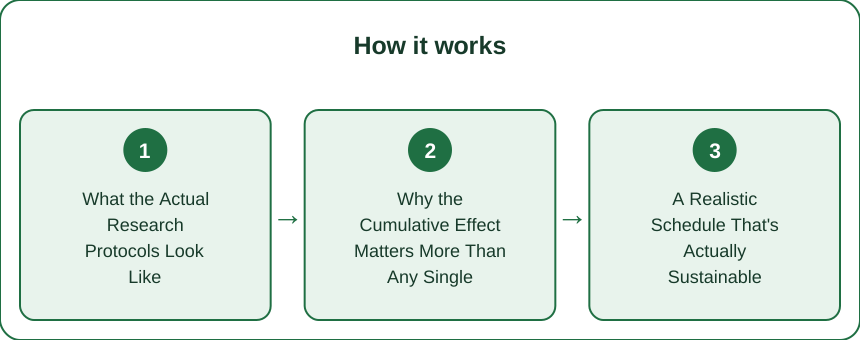
What the Actual Research Protocols Look Like
Studies showing measurable outcomes for skin texture, collagen-related markers, or muscle recovery from red light therapy typically used structured, repeated sessions — commonly 3-5 times weekly — sustained over 8 to 12 weeks minimum before evaluating results. A device used inconsistently, even a genuinely effective one, simply isn’t replicating the exposure pattern that produced the results being marketed.
Why the Cumulative Effect Matters More Than Any Single Session
Red light therapy’s proposed mechanism involves supporting mitochondrial activity in skin and muscle cells over repeated exposures — it’s generally understood as a cumulative, gradual-adaptation process rather than a single-session fix. This makes it mechanically similar to strength training or skincare actives in that regard: one session rarely produces a noticeable result on its own, and the value shows up in the accumulated pattern of many sessions.
A Realistic Schedule That’s Actually Sustainable
Rather than an ambitious daily commitment that becomes easy to abandon after a busy week, anchoring sessions to an existing habit — right after a shower, during a specific TV show, alongside a skincare routine — tends to produce far better long-term consistency than a standalone calendar reminder. 3-4 sessions weekly, reliably sustained, generally outperforms an ambitious daily plan that collapses after two weeks.
Why Missing a Few Days Isn’t a Reason to Restart the Clock
A missed session or even a missed week doesn’t erase prior progress — the cumulative research protocols weren’t testing for zero interruptions, they were testing for overall consistency across a multi-week window. Getting back to the routine matters more than any specific missed day, and treating a lapse as a reason to abandon the routine entirely undoes far more progress than the lapse itself did.
Session Length and Distance Still Matter, But Secondary to Frequency
Following the manufacturer’s recommended distance and session duration remains important for getting adequate light exposure, but a perfectly executed single weekly session is still working with less cumulative exposure than a slightly imperfect four-times-weekly routine. If a choice has to be made between an ideal session done rarely and a good-enough session done consistently, the research pattern favors consistency.
What Nobody Tells You About Visible Timelines
Even with excellent consistency, most people don’t notice a visible difference before 4-6 weeks, and the most commonly cited improvements (skin texture, tone evenness) tend to become clearer around the 8-12 week mark — which is well past the point where an inconsistent user would have already decided the device doesn’t work and stopped using it.
FAQ: Red Light Consistency Questions, Answered
Is it possible to do red light therapy too often?
Most consumer devices are designed for daily or near-daily use without issue, but following the manufacturer’s specific session-length guidance is the more relevant limit than frequency alone.
Does time of day matter for consistency, or just total sessions per week?
Total weekly sessions matter more than the specific time of day — pick whatever time you’re most likely to actually stick with.
If I’ve been inconsistent for months, do I need to start the 8-12 week timeline over?
Effectively yes for judging visible results — treat a genuinely consistent restart as week one of a fresh 8-12 week window rather than counting prior sporadic use.
TL;DR:
- Red light research protocols used 3-5 sessions weekly for 8-12+ weeks — sporadic use doesn’t match this pattern
- Benefits are understood as cumulative, not single-session, similar to skincare actives or strength training
- Anchoring sessions to an existing daily habit beats an ambitious standalone schedule that’s easy to abandon
- A missed day or week doesn’t erase progress — consistency over the following weeks matters more
The device usually isn’t the problem — the gap between how it’s marketed as a quick fix and how the underlying research actually used it (repeatedly, for months) is where most disappointment comes from.
Keep Reading
This article is for general informational purposes only and is not medical advice. Always consult a qualified health professional for guidance specific to you.