Red Light Therapy: The Honest Review
Quick Answer: Red light therapy (photobiomodulation) has genuine, decades-old research behind it — with the strongest evidence for skin outcomes (collagen, fine lines, wound healing), androgenetic hair loss, and short-term muscle recovery. Effects are modest and require consistency: typically 10–20 minutes, 3–5 times a week, for 8–12 weeks. The weight-loss, detox, and mood-transformation claims are marketing. Look for devices publishing actual wavelengths (630–660nm red, 810–850nm near-infrared) and irradiance figures.
Red light therapy went from physical therapy clinics to bathroom counters in about five years, and somewhere in that journey the marketing sprinted well ahead of the science.
The honest position is annoyingly nuanced: there is real research here, and there is real overselling. Neither “it’s a scam” nor “it’s a miracle” is accurate. Here’s how to tell which claim belongs in which pile.
How Does Red Light Therapy Work?
The field’s actual name is photobiomodulation, and it has been studied since the 1960s. That’s not a wellness-trend timeline; that’s a legitimate research history.
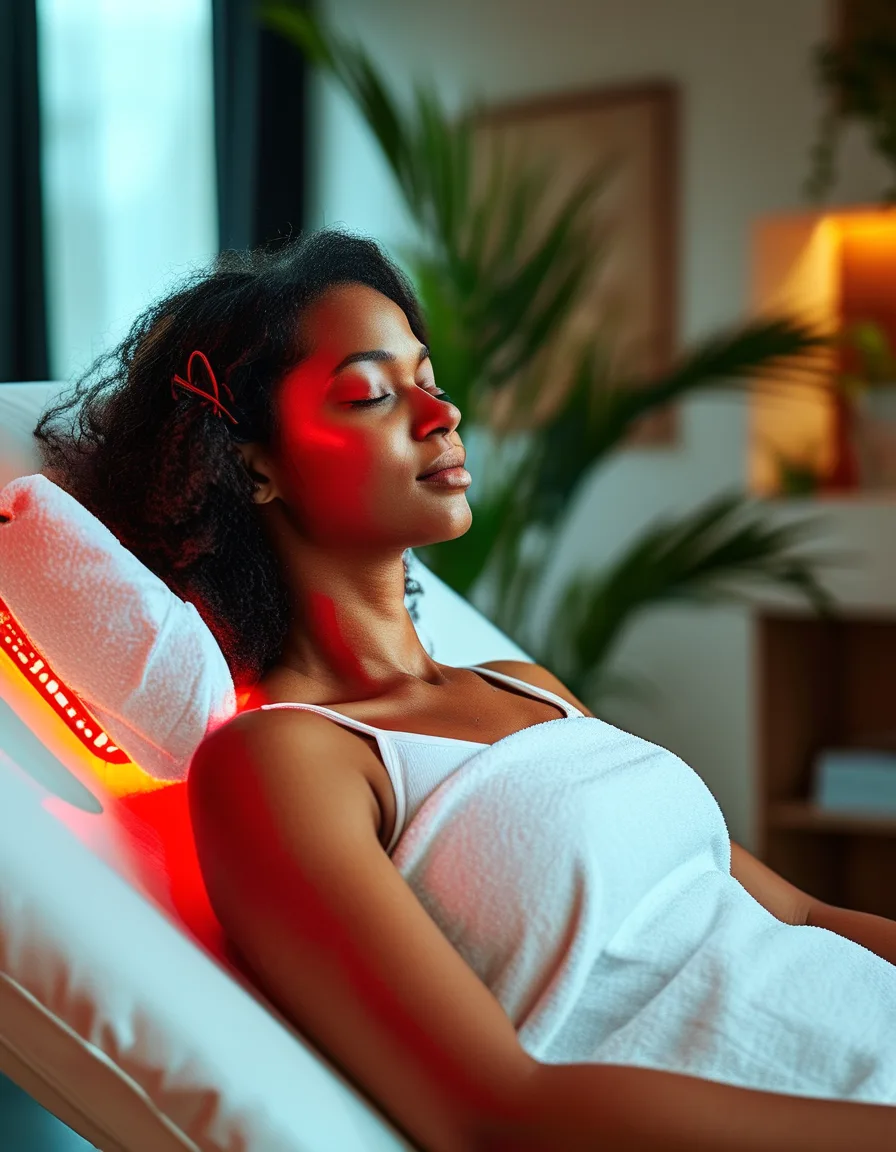
The proposed mechanism: red and near-infrared light at specific wavelengths penetrates skin and is absorbed by cytochrome c oxidase, an enzyme in the mitochondrial electron transport chain. The theory is that this absorption increases ATP production, transiently raises reactive oxygen species in a way that triggers cellular signaling, and releases nitric oxide, improving local blood flow.
Two honest caveats: the mechanism is plausible and reasonably well-supported at the cellular level, but the translation from “does something to mitochondria in a dish” to “produces a meaningful outcome in a person” is exactly where a lot of wellness claims fall apart.
So: not crystals. Also not magic. Worth sorting.
What Does the Evidence Actually Support?
Strongest evidence:
- Skin — collagen and fine lines. The dermatology literature is the most consistent. Multiple controlled trials show measurable improvements in collagen density, skin roughness, and elasticity over 8–12 weeks of regular treatment. Effects are real and modest — think “noticeable in before/after measurements” rather than “noticeable to your friends.”
- Wound healing. Reasonable evidence for accelerated healing, which is where the clinical use originated.
- Androgenetic hair loss. Low-level laser therapy devices for pattern hair loss have FDA clearance and a body of supporting trials. Effects are modest — some regrowth and reduced shedding, not restoration.
Moderate evidence:
- Muscle recovery and delayed onset soreness. A number of sports-science studies show reduced soreness and faster strength recovery when applied before or after exercise. Effect sizes are small but consistent enough to be interesting.
- Joint pain, particularly knee osteoarthritis. Some positive trials, though results vary considerably by protocol.
Weak or absent evidence:
- Fat loss and “body contouring” — the claims substantially outrun the data
- “Detoxification” — not a mechanism that means anything specific
- Mood, sleep, and cognitive enhancement — some early research, nothing conclusive
- Anything described as revolutionizing multiple unrelated body systems at once
The pattern across everything above: effects are gradual, dose-dependent, and require consistency. Weeks of regular sessions, not one glowing epiphany.
Myth vs Fact
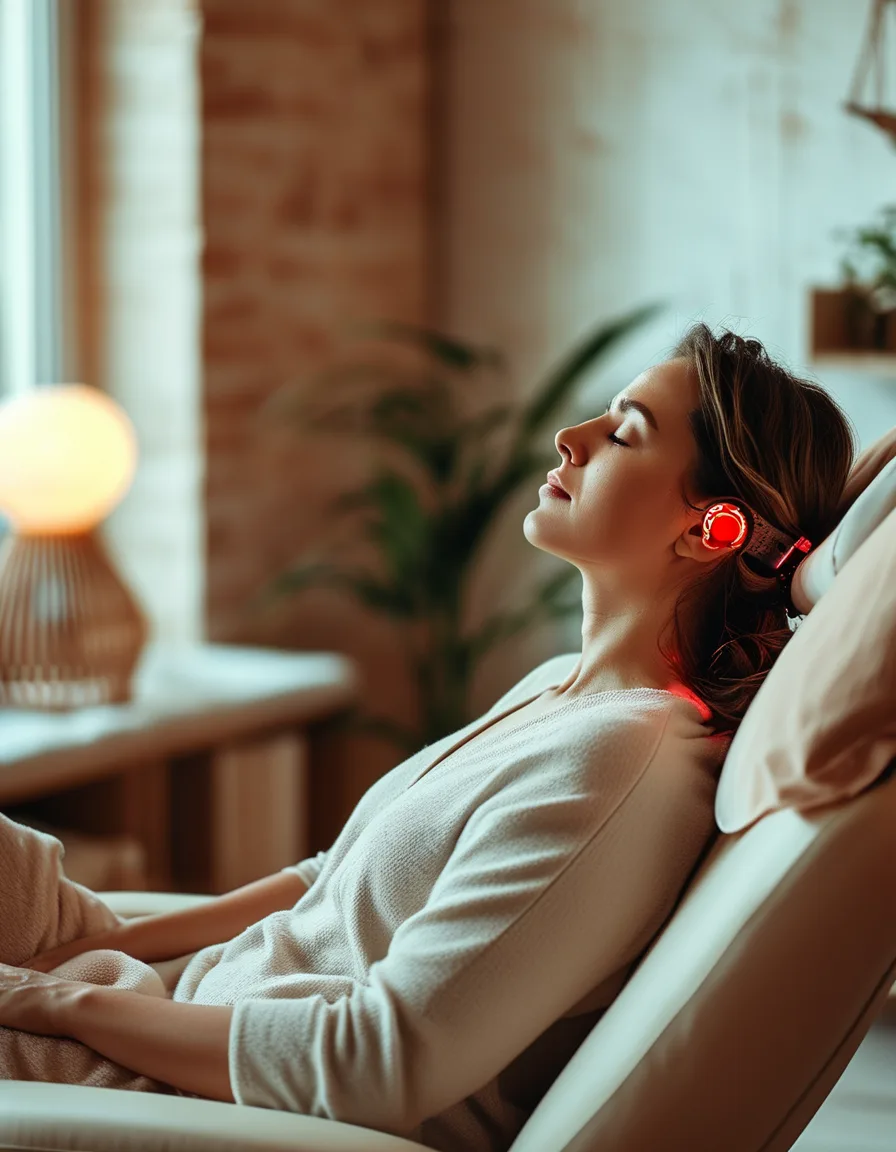
Myth: More light and longer sessions mean better results. Fact: Photobiomodulation follows a biphasic dose response — a curve where too little does nothing and too much can actually reduce the effect. This is one of the better-established findings in the field and one of the most commonly ignored. Follow the manufacturer’s guidance rather than doubling it.
Myth: Red light therapy burns fat. Fact: The evidence here is thin and the effect sizes tiny. Devices marketed primarily for fat loss are the clearest signal that a company is selling ahead of its data.
Myth: All red light devices are basically the same. Fact: Wavelength and irradiance vary enormously. A device that doesn’t publish both is asking you to trust vibes. Some cheap panels emit at wavelengths with no supporting research at all.
Myth: It’s the same as a tanning bed. Fact: Completely different. Tanning beds emit UV, which damages DNA. Red light therapy uses visible red and near-infrared, which contain no UV. Different physics, different risk profile.
Myth: You’ll see results in a week. Fact: Studies showing skin changes typically ran 8–12 weeks minimum. Anything promising visible change in days is describing the flush from increased blood flow, which fades within an hour.
The Ritual Effect (Worth Naming)
Here’s an uncomfortable observation about testimonials: the protocol is ten warm, quiet minutes of doing nothing, daily, for months.
That alone would improve most people’s wellbeing measurably — with the light switched off. It’s ten minutes of enforced stillness with no phone.
This doesn’t mean the light does nothing. It means that when you read someone saying “I feel amazing since I started,” you can’t attribute all of that to photons. Placebo plus a pleasant daily ritual is a genuinely powerful combination, and it’s not a criticism — feeling better is feeling better. It’s just worth separating from the specific claims.
If You Want to Try It: A Buyer’s Checklist
Look for published specs, not adjectives:
- Wavelengths stated numerically. The commonly studied bands are red at 630–660nm and near-infrared at 810–850nm. If a listing says “red light” without a number, that’s a red flag.
- Irradiance (power density) in mW/cm², at a stated distance. “Powerful” is not a specification. Most studied protocols land somewhere in the range of 20–100 mW/cm² at the treatment surface.
- Third-party testing for the claimed output.
On protocol:
- Typical session: 10–20 minutes, 3–5 times a week
- Give it 8–12 weeks before judging
- More is not better — respect the dose curve
- Follow the eye protection guidance in the manual. Near-infrared is invisible and bright red panels are genuinely uncomfortable to look at.
On cost: full-body panels run $500–2,000+. Targeted masks and handhelds run $150–500. Many gyms, recovery studios, and dermatology practices now rent panel time for $20–40 a session — a far cheaper way to find out whether you’ll actually use it before committing to a large purchase.
When to see a professional: talk to a doctor before starting if you’re pregnant, taking photosensitizing medications (some antibiotics, retinoids, and acne treatments), have a history of skin cancer, or have an active skin condition on the treatment area. And if you’re using it for a specific medical problem — chronic pain, a wound that isn’t healing, significant hair loss — see a clinician rather than self-treating with a consumer device. There are options with substantially better evidence.
Mini FAQ
Does red light therapy actually work for wrinkles?
The skin evidence is the strongest part of the field. Controlled trials show measurable improvements in collagen density and skin texture over 8–12 weeks of consistent use. Expect modest, gradual change — meaningful in measurements, subtle in the mirror. It complements sunscreen and retinoids rather than replacing either.
How long before you see results from red light therapy?
Most studies that found effects ran 8–12 weeks with 3–5 sessions per week. Some people notice temporary skin flushing immediately, but that’s increased blood flow, not a lasting change. Judge results at three months, not three weeks.
Is red light therapy safe?
Generally yes — it emits no UV and has a good safety record in the literature, with side effects mostly limited to occasional temporary redness or eye strain. The main cautions are photosensitizing medications, pregnancy, and a history of skin cancer, all of which warrant a conversation with a doctor first.
TL;DR
- Real mechanism, real research — photobiomodulation has been studied since the 1960s.
- Strongest evidence: skin collagen and fine lines, wound healing, androgenetic hair loss.
- Moderate: muscle recovery, joint pain.
- Marketing: fat loss, detox, mood transformation, anything claiming to fix everything.
- Dose curve is biphasic — more is genuinely not better.
- Buy on specs: wavelengths (630–660nm / 810–850nm) and irradiance in mW/cm², published.
- Give it 8–12 weeks at 10–20 minutes, 3–5×/week. Rent studio time first.
Plausibly useful, with modest effects in specific lanes. In the wellness aisle, that’s high praise.
Keep Reading
This article is for general informational purposes only and is not medical advice. Always consult a qualified health professional for guidance specific to you.